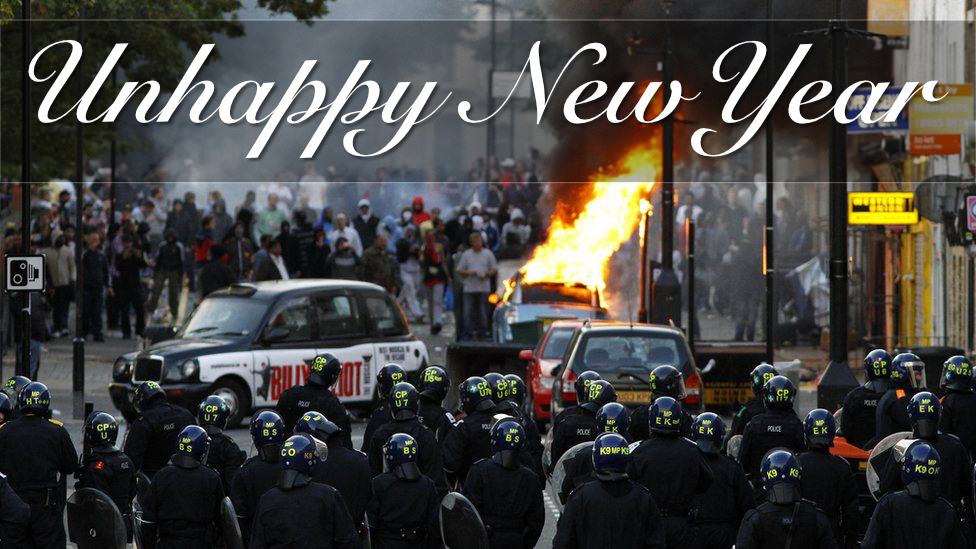
If you are happy and looking forward to 2026 you are seriously unaware of reality. Government institutions, in cahoots with their private-sector partners, are expanding and intensifying the powers of the administrative state. Their goal is to eliminate citizen rights, traditional values and personal choice in order to homogenize the Earth’s population into a global state of dependence and servitude. In their AI-driven, technocratic dictatorship the “common good” is replaced with exclusive elite privileges and morality is sacrificed to theoretical machine efficiency.
There is nothing happy about 2026. The entire global debt-based financial system will implode this year. Debt servicing costs on hyper-inflated asset values will destroy society’s ability to function. The value of money will collapse. Real assets will seized and liquidated to the wealthy for pennies on the dollar. The gap between the rich and poor will expand exponentially and the bottom 80% of the world’s population will own nothing, rent everything and be very unhappy.
Nothing can be done to prevent this from happening for it is caused by a foundational economic problem that society refuses to even acknowledge let alone fix. While people are beginning to realize that it is impossible to borrow your way out of debt, few will even consider that overspending and “too much money” do not create the need for debt. The opposite is true. New debt only becomes necessary when new profits are demanded. New imaginary money (debt) is needed every time new profit (imaginary value) is added to prices. Think about it. If a new product is built that costs $100 to make (ie. $100 is paid out to suppliers and workers in the marketplace who will also be the customers for the new product) but the producer adds a profit to the price and demands $150 for each unit made then there will be a $50 shortfall of money available to buy each unit. If no new debt is created there won’t be enough money in the marketplace to sell the production so layoffs and business failures will occur.
Debt is the converse of profit. They are two sides of the same coin. Profit creates imaginary value that exceeds the sum of all costs. Debt creates imaginary money to pay for the profits created. Too little money in the marketplace (caused by profit) creates the need for debt. Its not the other way around. Too much debt money isn’t the cause of inflation, it’s a consequence of profit. Profit, the main ambition of the marketplace, is the true cause of debt and the real source of inflation. Until society recognizes this last logical step in the relationship between profit and debt we will never have a stable economic money system. Debt and profit both feed wealth and power to those with money. Debt and profit both expropriate spending power and productivity from borrowers and consumers. Profit and lending have transferred ridiculous amounts of wealth to the super rich and that economic power has gone to their head and turned into dangerous political power.
As governments around the world continue to roll out the agenda for a one-world dystopia packaged in ethnically and culturally homogenized 15-minute cities, the pushback will become intense as citizens are forced to wake up. Freedom of speech and public resistance will be outlawed and criminalized if people don’t stand up now and refuse to comply with the fantasies of the technocrats. Yes 2026 promises to be a terrible year but things will only get worse and then impossible for our children if we shirk our responsibilities to defend freedom and morality now.
Join the resistance: https://localResistance.org
Help build alternatives: https://localAlternatives.net
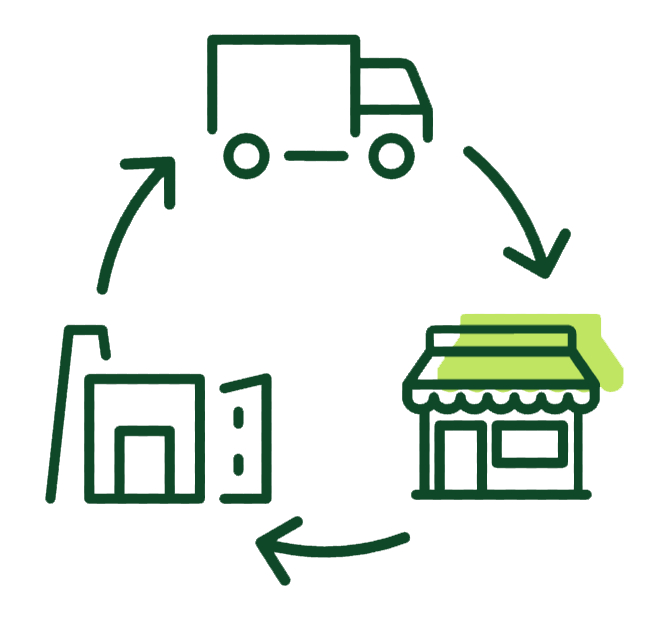
Imagine if society tracked productivity and resources solely by using a chain of custody. From initial producer to final end user, resource inputs would be transferred without any payments at all along the entire supply chain. The ownership of resources used would not enter in to it at all. Chain members would simply be temporary custodians of value. Imagine product values were measured in labour hours which accumulated as goods moved along a supply chain. Imagine that payments only started when final products were actually consumed and that consumers only paid depreciation costs at the actual rate that their own usage caused.
The rationale for such a system is simple. All natural resources were supplied by Creation, humans did not create any of them. Creation provided them for every species on Earth to use and enjoy for free. Humans have no right to price natural resources. The costs involved to access and refine resources would be legitimate if imaginary values were excluded from the process. The most honest way to measure processing costs is by using the number of hours required for each step along a production chain. Consider this example:
Your dining room table began as trees in a forest. Creation provided the trees for free. A lumberjack had to extract the trees and send them to a mill. The lumberjack’s own labour time is a legitimate cost. Any depreciation of his tools and machinery is a legitimate cost. The value of any supplies like gasoline that were consumed during the harvesting are also legitimate costs. The value of all of these inputs can also be measured by the time it took to produce them. All of the production costs of the tool manufacturers and the oil & gas suppliers can be measured in hours, as the cumulative total of hours involved in their own supply chains. Once all of the lumberjack’s input costs and his own labour hours are added together the price of his trees is established automatically. No imaginary, subjective “value added” inflates the price.
The same considerations and calculations are applied at the planning mill where the trees are converted into lumber. A similar set of input costs that include all external inputs and all internal operating costs like labour hours and actual asset depreciation determine the total accumulated values or selling price. Value calculations continue to accumulate as the lumber moves to distributors and retailers and reaches the furniture manufacturer. He adds his costs to the total and sends the finished product off again to more distributors and retailers. Finally an end user purchases the product and the chain of credit that passes from one supplier to the next as goods are transferred is fully eliminated by the consumer’s payment.
The products moving along a production chain are being made, not consumed. There is no reason to pay for any of them. Their value is being enhanced through refinement, not diminished by consumption. Each of the suppliers along the chain is simply a temporary custodian of the resources that are becoming a finished product. Only the end user, the actual consumer, needs to pay the cost of consumption which should be based on the real rate of depreciation caused by the user of the product. It is unnecessary and ridiculous to pay for a major asset that is designed to last for 100 years or more (like a well-made house) all at once, upfront before acquiring the right to “own” or use it. This is merely an evil technique of our current economic system that intentionally creates a perpetual need for debt in order to transfer wealth endlessly to an unproductive class of parasites of lenders and financial manipulators.
Consider how a chain of custody model would affect the economy. Businesses would no longer need a fortune in upfront capital to get started. There would also be no operating costs to pay. Products that they produced would simply pass through their facilities without payments of any kind. Credits for internal labour hours would generate an amount of new money for workers that was exactly equal to prices of the goods and services that they produce. All operating costs would merely be accounting entries that are passed along to the next custodian of values in the supply chain. Workers and management would be rewarded fairly and automatically for their productive hours. Investors, shareholders and other speculative parasites would no longer be necessary. Local individual enterprises, free at last from the chains of debt, would flourish and thrive.
Combine this simple idea with the concepts of public credit and usership that I have described previously and a new world of freedom can be built almost overnight. All it takes is a commitment to change and change we must before the insanity of the technocrats imprisons us forever in their godless make-believe world of global servitude.

All life on Earth depends upon energy from the sun. Plants convert the sun's energy into matter. Other living things use the energy stored in plant matter to fuel and sustain their bodies. Life is a perpetual sharing of energy, an endless cycle of energy conversion... sunlight into matter and matter into energy. Even the sun itself is simply converting matter into energy. We are all parts of the same energy miracle, and the sum of us all is one.
Our time on Earth is the most valuable asset that we have. Once it passes, none of our other possessions will matter at all. If you learned that you were terminally ill and about to die, how valuable would another year of normal, healthy living be to you? More valuable than all of your other possessions combined? Would you then understand that the value of your time on Earth is truly priceless?
So if we are all part of the same energy, and the true value of our time is priceless, can we be anything other than equal? Of course we are not equal in size, or strength, or intelligence, and our abilities and interests differ. But that is not the point. We don't have to be the same to be equal.
Equality means that we all have a natural, equal right to participate in life fully and freely without exploitation or coercion. True equality can only arise from an unlimited respect for life itself... from an unlimited awe of the sanctity of all living energy. Only from that unified, common source can we see where we each fit in. Unfortunately our current culture has almost totally obliterated this point of view. It totally ignores the unity and connectedness of all living energy and violently disrespects the sanctity of life.
Our current economic system rewards selfish, anti-social behaviour and creates a hostile environment that brings out the worst in people (greed, dishonesty, vanity, etc.). People then interpret these behavioural symptoms as being an indication of our true "human nature". But if you put the same people into a healthy, co-operative economic environment, an entirely new set of social behaviours will emerge (like humility, honesty and respect). Our only true human nature is adaptability. Our behavioural capacity ranges from the very best to the worst imaginable. It's entirely up to the environmental relationships that we are a part of.
It is ironic that the true source of all real wealth on this planet comes from things that mankind has had absolutely no control over. Natural resources are a gift from nature to all living species, both here today and yet to come. Mankind had no hand at all in their creation. Likewise, before our birth, we were not given a choice of the talents and abilities we would have here on Earth. Nature again provided us with the internal gifts that we inherited. Everything of value made by man was created by combining these natural gifts together. Human and natural resources are the only two ingredients of every human creation. So how can we justify anything other than an equal human right to enjoy the gifts that nature provided freely for us all?
If we could just learn to settle for true equality, then all full-time workers would be able to earn over $100,000 a year. Although the richest 5% may not like this idea, 95% of humanity should be able to see that true equality would be in their own best interest. So why is there so much resistance to the idea of true equality? What do people fear about equality?
Equality does not require that we give up our individuality. Equality does not imply that we must become "the same". In fact, the opposite is true. Equal rights insist that, despite our individual differences, we all maintain a natural right to live freely, without coercion or exploitation.
Equality does not limit our abilities or prevent us from being better than others in certain capacities. Again, the opposite is true. Equality gives us the freedom to explore and develop our own unique set of abilities without the threat of financial insecurity. People are totally free to develop their natural superiorities. They just can't use them to lessen the equal rights of others.
Equality would not make us all lazy. This is a false prophecy perpetuated to scare and mislead the public. Think about the facts for a moment. If income alone motivates people to work, why are so many people working at difficult or stressful jobs for the minimum wage? When the marginal cost of doing nothing is so low, why aren't workers flocking to the welfare roles? There must be another motivation for working a minimum wage job other than just a slight increase in income. Does it really make sense that paying people more money for what they already do now will motivate them to quit working? Do you feel like quitting your job every time you get a raise?
Equality will not destroy the incentive and motivation of our most talented people. The brilliant and artistically gifted are driven by their desire to express themselves. The depth and meaning of their lives comes from the pursuit of this expression. The true artist or genius has no choice. It is simply who they are. If they try to ignore their gifts, they will destroy themselves. They must release the creative urges that drive them, whether they are paid for it or not. Albert Einstein would not have chosen to work in a coffee shop even if a coffee shop worker earned the same as a physicist. John Lennon would not have worked at Walmart even if they paid him as much as he earned on the road.
Our intuitive and innate desire for equality has a long history of denial. The Declaration of Independence introduced the principle in 1776 with the famous words "We hold these truths to be self-evident, that all men are created equal, that they are endowed by their Creator with certain unalienable Rights, that among these are Life, Liberty and the pursuit of Happiness." Unfortunately however, these unalienable rights from our Creator never made it into the economic fabric of society. If we are ever to learn to cooperate peacefully and survive as a species, we had better incorporate them soon.
The Financial Party suggests that society has the potential to be led by higher values than money alone. Most people are reasonably content once their income level enables them to live comfortably and avoid the risk of poverty. Finding work that is interesting, socially meaningful and personally challenging becomes much more important to them than merely earning more money. A deeper purpose and meaning of life will penetrate our culture. Self-development will become our primary inspiration, not for monetary gain, but for the natural joy and inner satisfaction that personal growth generates. Fortunately there will always be many people who are happy to work less demanding occupations, so long as they are compensated fairly for their time.
Let free competition on a level economic playing field look after who does what. Those who have been blessed with superior natural gifts will be rewarded with exceptional opportunities to develop and use their talents. Social status will be earned through public service. Dangerous or unpleasant jobs will be rewarded with greater social respect and more paid time-off. All incomes will not be equal. Create a society where equal is the highest value possible. Teach our children that superiority without humility is wrong. Give people the economic freedom to volunteer with their lives for the kind of society they want. One life, one vote... now that's true democracy.