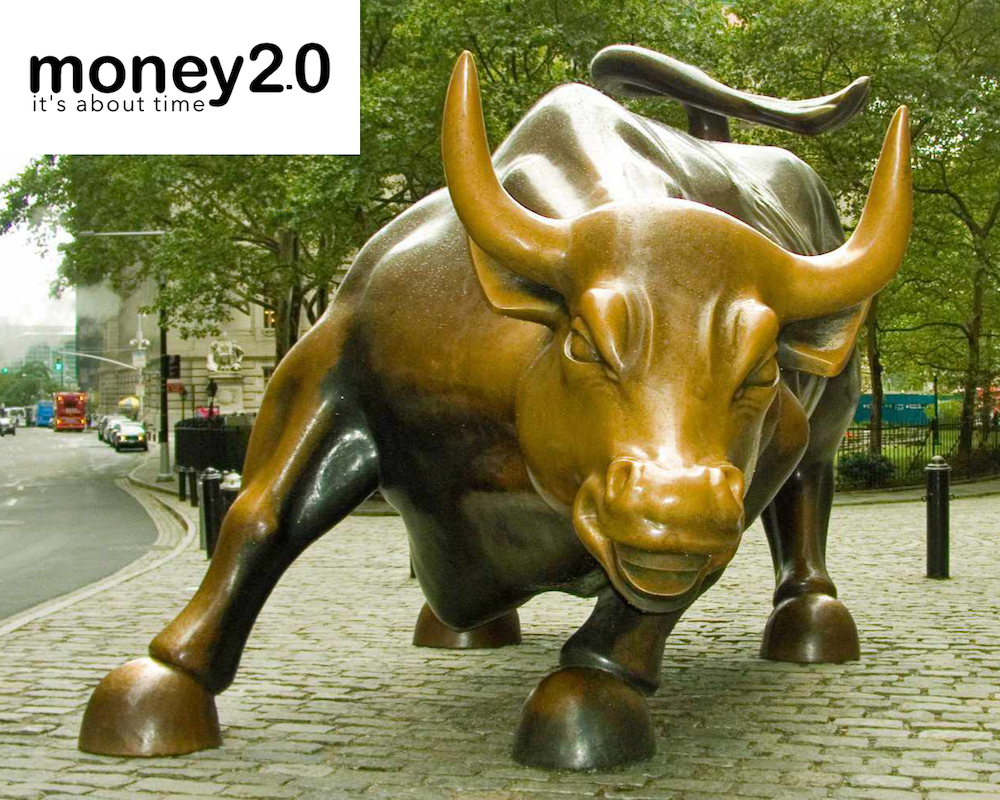
The Bull of profit is running wild inside the minds of the public. Because people who charge profit acquire more money to spend, they believe that it increases their purchasing power. But as shown in the Dec2024 part 2 newsletter, this is the lie that fuels the constant need for debt and provides those who create the debt with an ever growing source of interest income.
Teaching us to ignore the carnage that the compound profit creates was necessary to unleash the Bull and inspire ruthless competition. The more people seeking profit, the greater the need for debt… so they feed the beast by making profit the “Sacred Cow” of capitalism.
Profit is like a private tax that is always paid by the taxpayer/consumer. Profits embedded in the external input costs of products and services that businesses use are always passed along to consumers in final prices. Profits embedded in the products and services that governments use are always passed along to consumers through taxation. And wouldn’t you know, all of the interest costs of both business and government debt are shuffled along to consumers as well through prices and taxation. Is it any wonder that taxation and inflation just keep on growing, forcing more and more families into poverty.
This is the path to the New World Order. Gradually raising the cost of living and making people more dependent on government “benefits” cooks the frogs slowly enough that they don’t see the danger and jump out of the pot. Interest is a private tax paid to lenders, government taxation is a public tax that is just as harmful as interest. Both siphon off the income of workers and steal the wealth that their labour produces. Look around you at the kingdom of corporate and government assets. The owners never produced any of it themselves. Workers built it all then had to pay for it multiple times over because of compound interest and profits.
It doesn’t really matter who produces the goods and services we need to survive. We will be brutally exploited by either private profit or public taxation if we continue to allow our current financial system to dominate our lives. If businesses took over all of the services of government and taxes were eliminated we would still be mauled by compounding profits. If government took over all of the production functions of business we would sink into a sea of endless taxation. Hopefully once people break free from the spell of profit and realize that the Bull is the primary driver of the debt-money system, the benefits of free cooperation will become obvious.
The corporate/government elite know that we are nearing the end of another financial cycle and that the burden of unaffordable debt will soon bring down the whole house of cards. That is why they are so eager to have a digital currency replacement ready before the stock market crash of 2029 comes. The crisis caused by the coming financial collapse is a premeditated, necessary part of their agenda for complete totalitarian control over every aspect of our lives. They have been busy preparing new foreclosure laws to facilitate the worldwide seizure and expropriation of both our financial and physical assets. The W.E.F. wasn’t kidding when they said in the future you will own nothing.
Please help others wake up and break free from the scam of profit. It is not in the best interests of society. We can and must do better than this if we are to remain free. We must reject the policies and agendas of the criminal cartel that has ruled the planet for centuries. We still have the power to save ourselves. They still need our labour and our purchasing power to complete their total takeover. Once robotic production, distribution and retail automation is complete we will be powerless and completely dependent upon them. We must act together NOW to build and use an alternative economic system to reclaim our productivity. That’s what the money2.0 series of articles is all about.
Please add your ideas and comments to this post here and help build the solutions we need. The more of us that get involved the better the solutions will become.
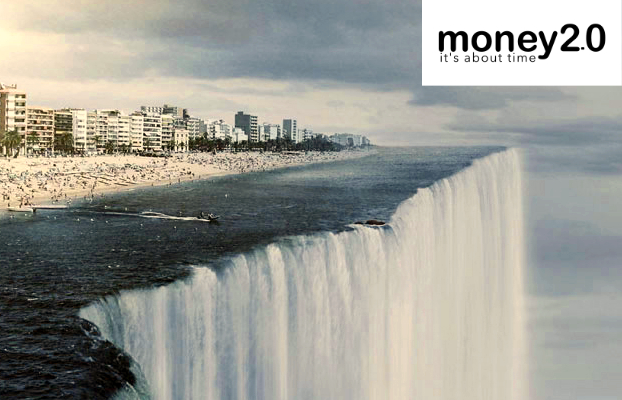
All wealth is created by bringing human and natural resources together. If the necessary resources are available, and there is a demand for new wealth to be created, a lack of money should never be allowed to stand in the way of achieving the possible. Accepting the idea that a shortage of money is beneficial to society is just as foolish as believing that the world is flat.
Each time new wealth is created, new money to represent and distribute that wealth must also be created. Ideally, the total amount of money in existence should match the total amount of existing wealth as closely as possible. Money that is created to represent wealth should remain in circulation until consumption extinguishes the wealth that it represents. Money is simply a claim ticket on wealth, that enables workers who produce wealth to defer their consumption of an equal amount of wealth until a later date.
In a monetary system based on labour, money is merely a receipt for productive work already performed. Workers themselves create all of the money needed for production and trade, simply by showing up for work. Employers don't need a reserve of their own money to pay their employees. The money for wages is created automatically, solely by the act of working. Employers simply confirm the labour contributions of their employees and tell the banks which accounts receive the newly created credits. No one else's money is ever involved.
A labour-based credit system would simply credit (record) the hours of work contributed to make new wealth possible, and reduce the outstanding credits as wealth was consumed. Private capital investment would no longer be required to initiate new projects. Instead, public credit (or public capital investment) would be provided interest-free to enable production, trade and government expenditures. Business and government could borrow production credits to initiate new projects, but credits to fuel consumer consumption would not be issued. Business-to-business "purchases" of external goods and services would simply transfer production credits, previously created for the seller, to the buyer's line of credit. Workers would use the wage credits transferred to them to purchase the production. The sales revenues of retailers would reduce their account balances at the credit bank. Once all of the wealth from a production cycle was fully consumed, all of the outstanding credit (that originally made the production possible) would have already been extinguished from the system. To ensure that the provision of credit would always remain fair and completely transparent, an online credit records service would be established as a public institution. Our existing network of retail banks would then simply plug into it.
In a labour-based credit system employers don't need a reserve of their own money to pay for production inputs from other businesses either. All goods & services that move from one business to another are simply transferred, without any money changing hands. Of course, the value of the transfers are recorded as an accounting entry in the records of both businesses, but no "cash on hand" is required or exchanged during the transactions.
Credit no longer involves borrowing other people's money. Credit no longer fabricates new money out of thin air. Credit is not a debt that must be repaid. Credit is simply an accounting method that is used to record transactions. Credit is simply a ledger of receipts. The total amount of new money that workers create by working goes into the ledger. The labour value of any goods and services that move from one business to another as production inputs goes into the ledger. The total amount that workers consume (purchase) also goes into the ledger.
All new money is created as a record of socially productive labour already contributed to society by workers. Businesses simply submit transaction receipts to their local bank. Businesses submit labour receipts on behalf of their employees for the time they spent working. Businesses submit transfer receipts for any production inputs they send or receive from other businesses. When workers exchange their labour receipts (credits) for merchandise, their labour receipts are destroyed and the purchase price is subtracted from the seller's outstanding credit balance. Money does not recirculate. When businesses transfer production inputs to another business, the transfer price is simply subtracted from the shipper's outstanding credit balance and added to the receiver's outstanding credit balance. No money is required at all.
All businesses keep an internal ledger of their own transactions. Banks keep a shared public ledger system. Banks no longer have the power to create new money or credit. Neither does the government. Only individuals themselves, by choosing to work, can create new money.
Asset Depreciation
With a labour-based credit system there is absolutely no reason for individuals or businesses to pay for major assets that they use any faster than they actually depreciate and wear out. Under our current debt-based monetary system, the cost of long-term financing prevents this from occurring. If a house was built to last 100 years and you financed it's entire value for 100 years at 6% interest, you would end up paying 6 times its original value, or 500% of its value in interest alone. The same holds true for major business assets like factories, malls and equipment. Businesses simply can't afford to pay off their debts at the true depreciation rate of their assets. They need to charge their customers more for the products they produce, to generate profits, to pay down their loans quickly. Without interest charges, the true depreciation cost of a $600,000 house, built to last 100 years, would only be $500 a month. Similar savings by business and government would lower consumer prices and any need for taxes significantly.
If people decided to save a portion of their income, inventories of existing wealth would grow but the employers who originally accessed the credit would not be penalized or pressured in any way for the return of the credit. Until their inventories are consumed, there is no reason to eliminate the credit that was created to make consumption possible. Consumption itself pays back the credits, and without the burden of interest, there would be no loan defaults. If an employer's inventory levels grew beyond his sales level, he would not be able to access any new credit until his inventory levels were reduced. Declining inventories would trigger new production. Inventories destroyed by age or accident would be treated as consumption and any outstanding production credits would be depreciated accordingly. No one would suffer a personal loss or injury when public investment capital was depreciated, so insurance would no longer be required. All credit would be tied directly to existing wealth. No one would profit or lose from the provision or use of credit.
Here's a simple example to illustrate how a new business would get started.
Joe decides to open a restaurant. He registers his business and gets a new business number (just like today). He establishes a new business account at his local bank. His account balance is zero. He orders his production inputs from his suppliers (the cooking equipment, tables & chairs, food ingredients, etc.). They ship his order and issue a transfer receipt to both Joe and his bank. Joe's credit balance at the bank now matches the cost of his order. Joe hires his employees and begins his operations. All of Joe's own labour hours, and those of his employees, are added to his credit balance at the bank. As Joe's customers pay for their meals (with the money their own labour created), their labour receipts at the bank are destroyed and Joe's outstanding credit balance at the bank is reduced accordingly. All of Joe's ongoing external costs (hydro, fuel, etc.) are added to his credit balance and subtracted from his suppliers credit balances. Business to business transfers are nothing more than an accounting entry.
Obviously, if Joe's sales fall far short of his expenses for an extended period of time, Joe's outstanding credit balance at the bank would grow to an unreasonable level. At that point Joe should be asked to come up with a plan to turn things around. If demand for his services continued to falter, then a limit on Joe's credit should be set. If Joe then reached that limit, it would be probably be in the best interest of the community if Joe chose a different line of work. None of Joe's own money would be lost if he closed the restaurant. No one else's money would be lost either. All of Joe's surplus restaurant equipment and remaining production inputs could be recycled into a new venture. Transfer receipts would lower Joe's outstanding credit balance at the bank, and any remaining credit balance would simply be erased (treated as consumption and depreciated to zero). Only accounting records would be affected. No one else's purchasing power would be lost. A small surplus of money would remain in the hands of Joe's employees, but this amount would be insignificant compared to the amount of totally worthless, unbacked credit in existence today.
Public Capital & Private Usership
The concept of public capital investment is a unique synthesis of public and private ownership. An entrepreneur uses public credit to acquire the physical assets he needs to engage his talent & creativity. His use of those assets is privately controlled by him. No one has the right to prevent him from using his buildings or equipment or to take any of his property away from him. As his assets age and wear out, their real value depreciates, so he must include that cost in his prices and repay the public credit that he used to get started, but only at the real rate of his asset depreciation.
This depreciation cost is added to his prices and is paid for by the public. The credit is both created and returned publicly. The enjoyment and use of the assets, however, is always privately controlled. If the producer continues his private use of the assets until they are completely worn out, they will have no value and the credit which enabled them to be created will have been fully returned. If however, the entrepreneur no longer wishes to use the assets himself, and the assets still have value, he can transfer the assets to another user along with the original credit balance that remains outstanding. He cannot add a private profit (or subjective value) to the transfer price of the assets for they were publicly funded and the public credit still outstanding constitutes a lien that defines their value and restricts their transfer price. They can only be transferred at their true depreciated value. Any request to transfer public assets at a higher or lower value will be denied.
This system prevents the accumulation of private wealth at the public's expense, but continues to provide the full enjoyment rights of private ownership. Not only does it eliminate the usury of interest on our entire physical asset base, it also avoids the ridiculous cost inflation caused by using amortization periods that are much shorter than the useful life of an asset. One of the most exciting features of this concept is that higher quality assets, designed to last longer and NOT wear out, become less expensive to own than inferior quality, disposable assets. When consumers purchase major assets such as homes, cars, etc., a portion of the public credit amount originally issued to the producer is simply transferred to the consumer. No new financing is required. Consumers then become obligated to repay the transferred portion of the original public credit, but only at the real rate of the asset's depreciation. Due to their longer durability, higher quality assets actually become more affordable than inferior products.
Public capital investment is needed to control the absurdity of the public being charged for the accumulation of private wealth. Consumers should expect to pay their fair share of the real depreciation cost of the capital assets that were used to make the products they purchase. As long as those costs do not include interest and are based on an amortization rate which truly reflects the real rate of depreciation for the production assets used to produce the products, then all is good. It is only when the current owners of capital use profit to try to pay for their capital costs faster than the real rate of asset depreciation that problems arise. In a labour-based credit system the initial amount of public credit needed to launch a new enterprise is always equal to ONLY the labour cost of the capital assets, raw material & component inputs, energy, etc. Setting prices equal to labour costs only, prevents a gap between wages and prices from ever arising and ensures that purchasing power is always equal to productive capacity. If automation and robotics reduce the need for human labour then prices will be reduced by an equal amount. Shorter working hours for everyone will follow reduced prices and eventually the need to work at all may disappear completely.
With a labour-based credit system no one ever has to borrow or rent "other people's money" to unlock and develop their own human potential. Each individual can choose for themselves how they contribute their own passion, talent and creativity to the collective garden of life. Credit is a free public utility, that is equally accessible to all.